Parents usually ask three things about teen MMA: is it safe, will it make my kid aggressive, and what does a class actually involve.
Short answers: it can be very safe with the right coaching, it usually does the opposite, and a class is mostly technique with a conditioning block at the end.
Key takeaways
- Class structure: 55 minutes of technical coaching, mobility warm-up, skill repetition, and conditioning with a 5-minute transition.
- Skill levels: Strictly separate Beginner and Advanced streams — newcomers train in structured, non-intimidating groups.
- Location: 382 Yonge St, Downtown Toronto (2-minute walk from College Subway Station).
- Free trial: Complimentary 1-on-1 private intro session with an experienced coach — all loaner gear provided.
What a teen class involves
Teens train the same curriculum as adults, scaled to their size and experience. Contact is limited until a coach is confident in a teenager's control, and sparring is never compulsory.
- A warm-up that builds coordination and mobility.
- Technique work in pairs with a coach watching.
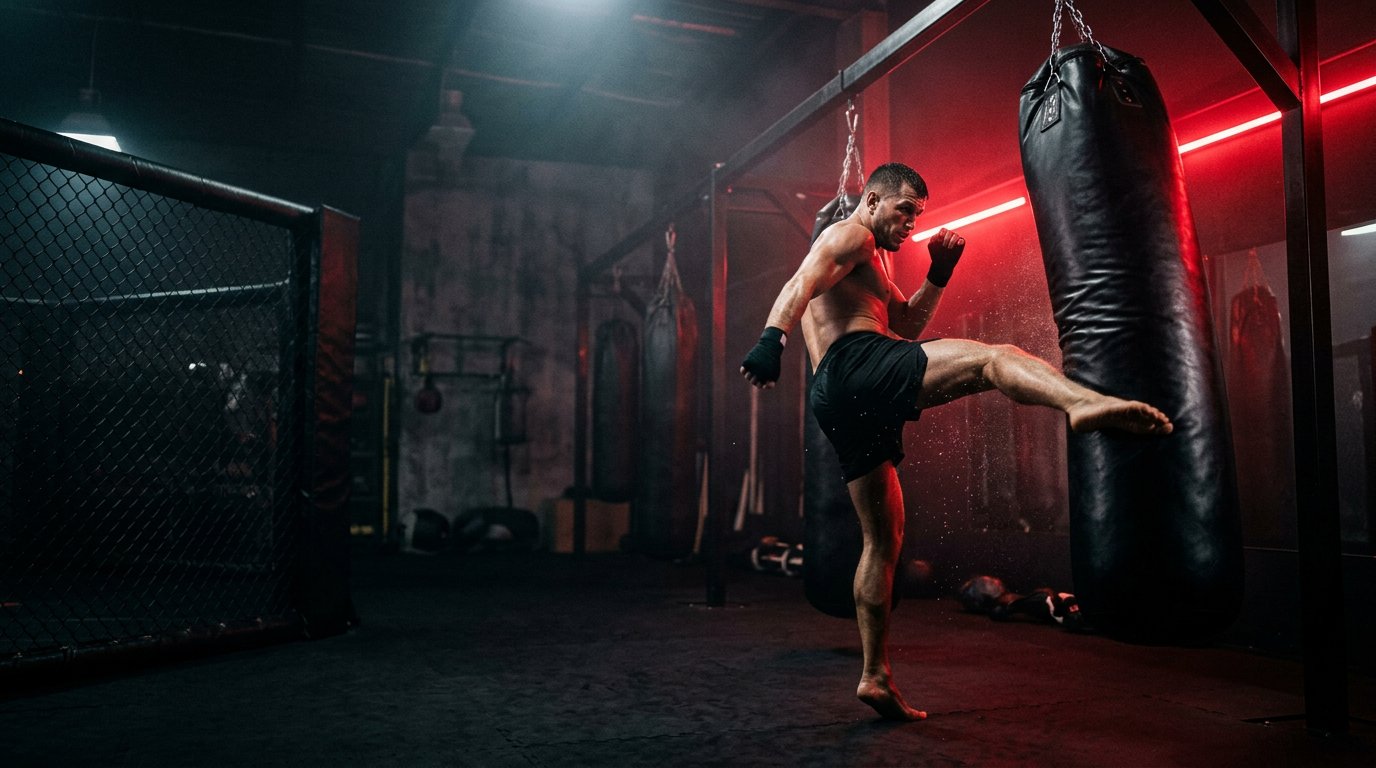
- Bag or pad rounds for fitness.
- A short talk about respect, control and what to do if a situation escalates outside the gym.
Why it helps at school
The confidence parents notice first is not about fighting. It is posture, eye contact and the ability to walk away from something stupid without feeling like they lost.
Fall training notes
Fall is the busiest season for new members — schools restart, work routines settle and people finally book the class they have been thinking about all summer.
- Book your classes for the week on Sunday night, not on the day.
- Warm up for two extra minutes if you have been sitting at a desk all day.
- Keep one rest day after your hardest session — recovery is part of the programme.
Common mistakes we see every week
- Rushing to spar. Sparring is the fun part, which is exactly why it comes last. Two or three months of drilling first makes sparring safer and far more useful.
- Training only the fun side. If you love striking, you will avoid the mat. Those are the rounds that expose you later.
- Skipping the warm-up. Five minutes of movement prep is the cheapest injury insurance you will ever buy.
- Holding your breath. Beginners tense up and stop breathing. Exhale on the effort — every time.
A drill you can try between classes
Three-round shadow work. You do not need a partner or a bag for most of this, and it takes about fifteen minutes:
- Round one: hands only. Move, jab, reset.
- Round two: add level changes and a single-leg entry.
- Round three: strike, then finish with a takedown and hold top position for ten seconds.
- Rest one minute between rounds. Three rounds, four times a week.
Training at ARC MMA in Toronto
We run MMA classes at 382 Yonge St in downtown Toronto, two minutes from College Station. Classes are capped at 20 people, coached from start to finish, and open to complete beginners. If you want to see whether it fits, book a free 1-on-1 trial — you will get a coach, a pair of loaner gloves and no sales pitch.
You can see the full timetable on the classes and pricing page, meet the coaches on the trainers page, check upcoming seminars on the events page, and browse official gear in the ARC shop.
For official sport regulations and competitive standards, consult the UFC Unified Rules of Mixed Martial Arts.
Frequently asked questions
What age can teens start?
Around 13 for most programs, depending on size and maturity. Ask us and we will assess it honestly.
Do parents need to stay?
For the first session, yes. After that it is up to you.
Is there a risk of injury?
Any sport has some. Controlled drilling, capped class sizes and no forced sparring keep it low.
Written by the coaching team at ARC MMA. Questions about this guide? Send us a message or call (416) 450-8020.
Related reading
- MMA for Fitness or Competition: Which Track Fits You? — November 2026 — MMA for fitness or competition? How the two tracks differ after your first few months, and how to tell honestly which on.
- MMA for Fitness or Competition: Which Track Fits You? — November 2026 — MMA for fitness or competition? How the two tracks differ after your first few months, and how to tell honestly which on.
- How Progress Works in MMA — November 2026 — How progress really works in MMA: the four stages, how coaches assess them, and why the plateau around month three is no.
Where to go next
If you train in Toronto, have a look at our coaches. For a wider view of the discipline, the UFC Unified Rules of Mixed Martial Arts is worth following: the UFC Unified Rules of Mixed Martial Arts.